If your work week starts with one big question, how hard will the commute be today, Reading is worth a closer look. Many buyers want more space and a suburban feel without giving up reasonable access to Boston, but not every commuter town works the same way for every job location. This guide will help you understand where Reading fits best, what the commute really looks like, and how the town’s housing and daily lifestyle may line up with your goals. Let’s dive in.
Reading’s commute advantage
Reading sits about 12 miles from Boston and between I-93 and I-95/Route 128, which gives you both rail and highway access. For many buyers, that flexibility is the biggest reason Reading stays in the conversation when comparing suburbs north of the city.
The clearest strength is the direct commuter rail connection to North Station. On the MBTA’s spring and summer Haverhill Line timetable, sample inbound trips from Reading to North Station run in the mid-30-minute range, including 5:18 to 5:54, 6:03 to 6:41, and 6:48 to 7:26.
If your office is in downtown Boston or near North Station, that direct route can make Reading feel practical and predictable. You are not relying on a transfer just to get into the city, and that matters when you are trying to build a repeatable weekday routine.
Boston commute from Reading
For Boston-bound commuters, Reading makes a strong case because the rail pattern is simple. You board in Reading and head straight into North Station on the Haverhill Line.
That setup tends to work best if your destination is already in Boston proper or within reach of North Station. It can also appeal to buyers who want the option to drive some days and take the train on others.
Driving is part of the equation too, but it comes with less certainty. Route planning estimates put an uncongested drive from Reading to Boston at about 19 minutes, though that should be treated as a baseline rather than a rush-hour expectation.
MassDOT’s 2025 congestion update points to long daily congestion on I-93 inside I-95/Route 128. The state also notes congestion on Main Street southbound from Reading to Medford, which helps explain why train times may feel more dependable than drive times during the work week.
When Reading works best for Boston jobs
Reading may be a particularly good fit if you:
- Work in or near downtown Boston
- Want a direct commuter rail trip to North Station
- Prefer having both train and highway options
- Are comfortable living a bit farther out than some nearby stops on the same line
That last point matters. Reading is a little farther out than Wakefield or Melrose/Cedar Park on the same commuter rail line, so the train ride is slightly longer even though the overall commute pattern is still direct.
Cambridge commute from Reading
Cambridge is where the answer becomes more nuanced. Reading can still work, but it is usually less straightforward for Cambridge commuters than for Boston commuters.
The main reason is the rail setup. The Haverhill Line ends at North Station, while many Cambridge destinations, including Harvard and Kendall/MIT, are tied to the Red Line, so a trip from Reading is typically transfer-based rather than a one-seat ride.
If you drive, route planning estimates put an uncongested Reading-to-Cambridge trip at about 19 minutes. Still, those estimates do not reflect the reality of peak congestion, and the same traffic patterns that affect Boston-area driving can make a Cambridge commute less predictable as well.
What Cambridge buyers should consider
If you work in Cambridge, it helps to think beyond the map. The question is not just distance. It is how you want your morning and evening to feel.
A transfer-based train commute may be perfectly fine for some buyers, especially if they value Reading’s housing stock or town feel enough to make that tradeoff. For others, a commute with more moving parts may be a reason to compare towns with a different transit pattern.
Daily life in Reading
A town can look good on paper for commuting and still miss the mark if day-to-day life feels inconvenient. Reading’s appeal is that it offers more than just a station and a highway.
Downtown Reading has a compact town-center feel rather than a purely strip-commercial layout. Town materials note several restaurants and eateries downtown, and the local economic development plan cites more than 20 restaurants in close proximity along with other retail and service uses.
That matters when your schedule is busy. If you can grab dinner, run errands, or meet friends without a long extra drive, the town may feel easier to live in from Monday through Sunday.
Parking also supports that convenience. Many downtown on-street spaces are free for up to two hours, and the train depot lot is available to visitors after 9:30 a.m.
Parks, trails, and outdoor access
For many commuters, outdoor space is part of the reason to move to a suburb in the first place. Reading offers a broader recreation network that includes the Town Forest, conservation areas, neighborhood walks, the Aberjona River Headwaters Trail, and the Higgins Trail, which connects Birch Meadow Park to Henzie Street and Criterion Road.
Birch Meadow is one of the town’s major outdoor assets. Town updates in 2026 described reopened playground, basketball court, pathway, and surrounding park areas after Phase II work.
If your routine includes early walks, weekend park time, or easy outdoor options close to home, these features add value in a very practical way. They help balance the demands of a Boston-area work schedule with a more grounded home base.
What housing looks like in Reading
Your commute is only half the decision. The other half is whether the housing stock matches what you actually want to buy.
Reading remains mostly a single-family housing market. According to the town’s 2023 Housing Production Plan, 76.7% of total housing units are single-family homes.
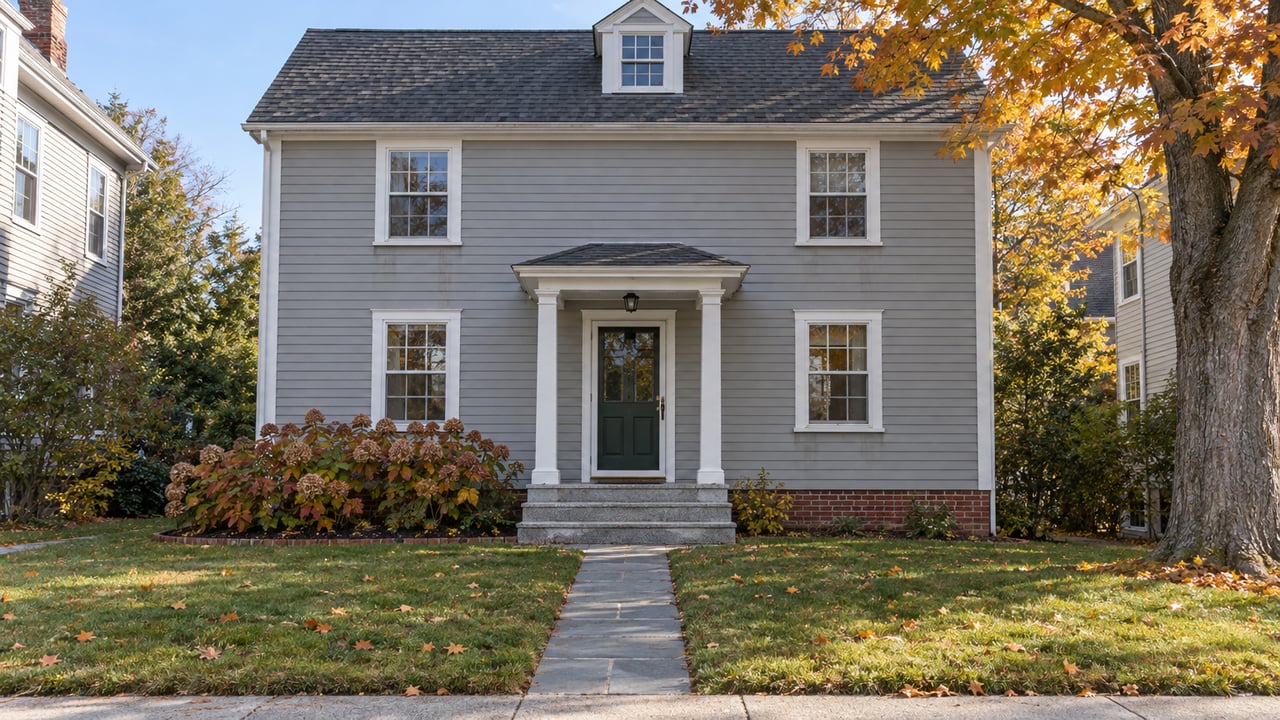
That gives Reading a clear identity compared with denser transit-oriented locations. It is best understood as a suburban detached-home market, with some older multi-family and mixed-use options closer to the center, rather than as a dense transit village.
Town planning materials also describe a broader local housing mix that includes single-family homes, duplexes, accessory dwelling units, triplexes, and multifamily buildings. They note that many older homes near downtown were built before modern zoning.
What that means for buyers
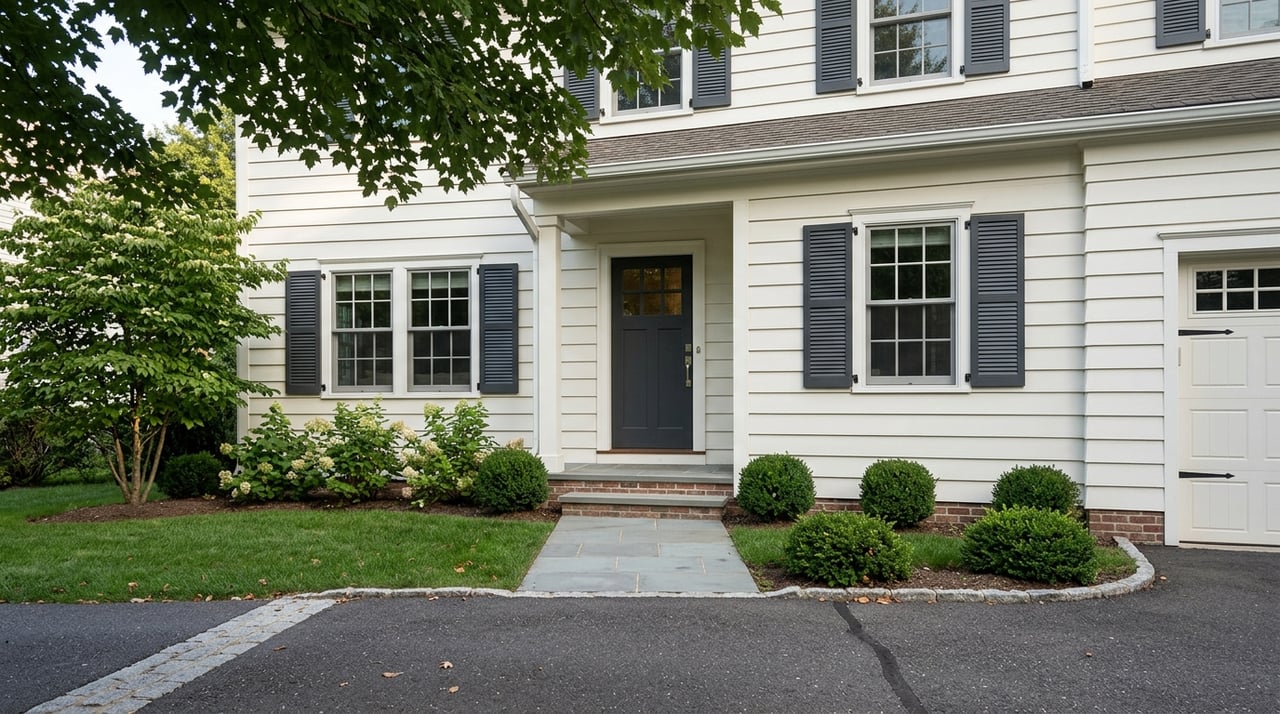
If you are looking for a classic suburban setup, Reading may line up well with your search. You are more likely to find the kind of detached-home environment many buyers want when they leave the city.
If your top priority is a dense, highly transit-centered housing pattern right around the station, Reading may feel less urban than you expected. In that case, it helps to compare not just commute times, but also the kind of neighborhood form and home style you want to live in every day.
Is Reading the right fit?
For many Boston commuters, the answer is yes. Reading offers a direct North Station rail option, access to major highways, a recognizable town center, local dining, and useful outdoor amenities.
For Cambridge commuters, the answer depends more on your tolerance for transfers or traffic variability. The town can still be a strong option, but the commute pattern is usually less direct than it is for Boston-bound workers.
In other words, Reading is often strongest for buyers who want a suburban single-family setting and a realistic path into Boston, even if it is not the shortest commute on the map. If that balance sounds like what you are after, Reading deserves a serious look.
When you are weighing commute patterns, housing options, and daily lifestyle, local guidance can make the decision much clearer. If you are considering Reading or nearby suburbs, Leeman & Gately can help you compare your options and find the right fit for the way you actually live.
FAQs
Is Reading, MA a good town for Boston commuters?
- Yes. Reading is a strong option for many Boston commuters because it offers direct commuter rail service to North Station on the MBTA Haverhill Line, along with access to I-93 and I-95/Route 128.
How long is the train from Reading to Boston?
- Sample inbound MBTA commuter rail trips from Reading to North Station run in the mid-30-minute range, including 5:18 to 5:54, 6:03 to 6:41, and 6:48 to 7:26.
Is Reading, MA a good fit for Cambridge commuters?
- It can be, but the commute is usually less direct than a Boston commute because Cambridge trips often require a transfer after arriving at North Station.
Can you park at Reading station?
- Yes. MBTA lists parking at Reading station as available and accessible, with weekday and weekend daily rates of $6 and $2.
What is downtown Reading like for daily errands and dining?
- Downtown Reading has a compact town-center feel with several restaurants, retail, and service uses. Many on-street spaces are free for up to two hours, and the train depot lot is available to visitors after 9:30 a.m. on weekdays.
What kind of homes are common in Reading, MA?
- Reading is primarily a single-family home market. The town’s 2023 Housing Production Plan says 76.7% of total housing units are single-family homes, with smaller shares in other housing types.